
Monday, February 10, 2014
Twitter..


The Trade Secret: Robert Newman on Fiction, Politics, and the Past
7.30pm, FCTC001, March 26th 2014 - Book a place HERE
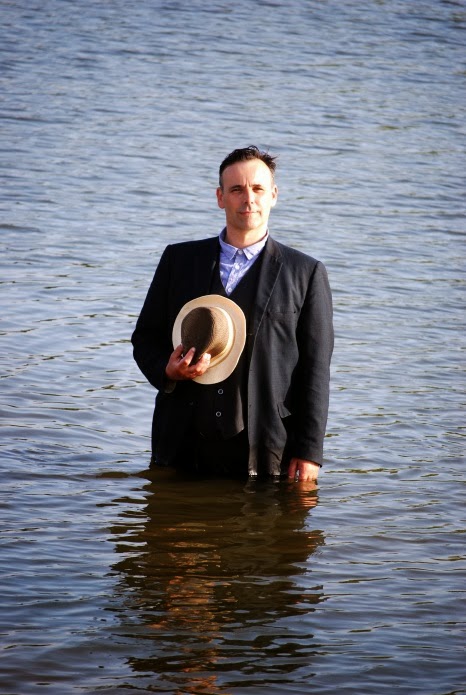 Robert Newman is an author, broadcaster, comedian, and political activist, who will be making a rare public speaking appearance at The University of Gloucestershire on March 26th 2014.
He read English at Selwyn College, Cambridge, before finding fame as a comedian on the BBC’s The Mary Whitehouse Experience. He was then half of Newman and Baddiel, described by The Guardian as ‘the most successful comedy duo of all time.’ But after a pioneering, record-breaking tour that famously sold out Wembley Arena, Newman turned his back on main-stream stadium comedy, pursuing a solo career as a novelist and political comedian. His first novel, Dependence Day, won the £10,000 Betty Trask Award, though he now claims ‘it wasn’t very good.’ In 1999, after his second novel, Manners, was published by Penguin, Newman briefly returned to television, reporting on the anti-WTO protests in Seattle for Channel 4.
His return to comedy saw him produce a series of erudite politicised solo shows that have toured in Britain and America, and have seen him compared to Lenny Bruce and described as ‘the funniest comedian I’ve ever seen’ in The Sunday Times, and ‘breathtakingly, heartbreakingly, goosepimplingly brilliant’ in The Scotsman. In 2005, he finally returned to television comedy when his show A History of Oil screened on More4, and in 2006 the BBC commissioned a six-part series, A History of the World Backwards. However, Newman continues to make his name as one of the most exciting and unusual of contemporary British novelists. His third novel, A Fountain at the Centre of the World, was chosen as a book of the year by Dave Eggers and described in The New York Times as ‘the talismanic Catch-22 of the antiglobalization protest movement.’ The Guardian argued it was a ‘wonderful, big-hearted, textured, funny, moral and deeply unfashionable book’, while The Independent asked if it could ‘herald a resuscitation of the English "literary political novel", almost dead in the water since the best work of Malcolm Lowry and Graham Greene’.
Newman will join us to discuss politics, fiction, history, and his new novel, The Trade Secret – an outrageous, continent-crossing epic that subtly blends fact and fiction, and is described by The Guardian as ‘a rollicking Elizabethan yarn that has much to say about the origins and nature of modern capitalism.’
Forgive me Ofqual I am about to Sin…
A Opinion Piece by Frances O'Hagan - an RPE Graduate who now teaches
“Life
in education is solitary, poor, nasty, brutish and short”[1].
If recent statistics are anything to go by, I can’t think of a more apt thing
to start with.[2]
This blog post is first and foremost about the changes that are happening to
the AQA Philosophy syllabus; however I can’t help but start by putting things
into some context. Firstly, this will not be an academic piece. As much as I
love statistics, I realise that I am in the minority and therefore I will use
them sparingly. This will be a post by me as a teacher of A Level Philosophy
and the experiences I have had with it. However, I want to start with exams.
Exams.
The educational assessment tool that love or loath is a fact of life. As a
teacher you are judged by your exam results and because of this, I still fear
results day. The knot of dread in my stomach that maybe I’ve messed up somehow
or that the questions on the paper are not going to be like the practice ones
that we do in class at all. I know it’s an irrational fear, but no amount of
logic can be applied to the situation. However, I do know one thing. Exams (namely
GCSEs) are getting easier. I know this because I work for an exam board writing
GCSE papers. I also mark for an exam board and every year I am astonished at
what passes for an answer. Every year I struggle with the ethics of what I’m
doing and vow never to mark papers again[3].
Having said this, not marking papers would be stupid. It gives my students an
advantage. A huge one. I know exactly how to answer the questions, what
examiners look for and whilst I may not say it aloud to them, the techniques I
learn year on year, feed into my teaching. There are bound to be some of you
who are sat reading this outraged; “that’s not fair! Your students have a
massive advantage!” Quite frankly, I don’t care if you think that; any teacher
can become an examiner and do exactly what I’m doing. I am not, nor have I ever
been an idealist. My love of Continental Philosophy put paid to that years ago.
All
this being said, I do have one massive advantage. I work in the Independent
Sector. Unlike my colleagues in the State Sector, whom I have a huge amount of
respect for[4] I
have more time. I have time to look at more interesting Philosophical
arguments. For example, I have just spent 6 weeks looking at fallacies and
propositional logic. No real use to my GCSE cohort but I know that I will get
the syllabus finished. In fact, I could spend 1 year on content and a year just
teaching the skills of the exam. That is however another argument and blog
post. Back to AQA…
AQA[5]
have decided in their wisdom that the A Level Philosophy needs to be changed.[6]
Their argument for this is that the exam needs to be streamlined and that
assessment needs to be improved. I will go from being able to choose from 7
topics at AS level (Reason and Experience is currently compulsory, and rightly
so) to 2 compulsory topics. AQA are right to question the quality of assessment
at A Level. In my own experiences, marking is patchy at best and grades vary
massively. I had one student 2 years ago go from a D to a B after a remark!
This is outrageous, especially as university places rely on these grades. This
says something about the training (or lack of) that AQA give their examiners
and the amount that you are paid to mark papers. A day is not long enough when
marking A Levels. This does not mean however, that the need to throw the baby
out with the bath water.
There
are some excellent topics to choose from in the A Level. I get to teach
wonderful topics such as Philosophy of Mind, Knowledge of the External World
and Political Philosophy. Not only that,
a text! A real life book written by an ACTUAL philosopher! By the time my
students get to university they have actually looked at some philosophy and to
quote a recent email from an ex-student “I feel better equipped to deal with
the course that I’m studying.” This is not to say that this A Level is easy,
far from it. The Philosophy A Level is difficult and rightly so. It teaches you
the necessary skills that you need and gives you an ability to discuss
difficult concepts. This alone is hugely rewarding. A Levels, in my humble opinion
are the hardest thing you ever have to do. My A Levels I found knackering (I
did 5 of them). I don’t ever remember being told my Head of Sixth Form that
they were easy.
So
we have reached an impasse. AQA have acknowledged (finally) complaints from people
like me about the consistency of marking and the need for something to be done
about it. I applaud them. What they have done however is get rid of the choice
of topics. I am able to teach things that interest not only me but also my
students. AQA have now decided to give us no choice and we have to teach the
Concept of God at AS. The God of Religion is not the same as the God of
Philosophy. Religious God has a place. Just not at the detriment of a rigorous
and challenging A Level and topics that are hugely important to look at.
AQA
have consulted with the British Philosophical Association about the new A
Level. The BPA have said that the new course is in line with undergraduate
courses and topics that are already popular within schools. I am yet to receive
a reply from the BPA about where they get their popularity figures from but I
don’t think I would be too far off if I guessed that they looked at schools who
teach the various Religious Studies A Levels that are on offer. Also,
Philosophy requires a level of knowledge that an RE teacher may not have. I
don’t wish this to sound condescending.
They
are good A Level courses and I’m sure that most of you now doing your degree
did that A Level but the point of the Philosophy A Level was that it is meant
to be different. It’s difficult to teach in places because AQA are hopeless
when it comes to supporting teachers, but with a little bit of reading between
the lines, and countless emails to the head of examinations for Philosophy, it
can be taught and taught well[7].
The new specification muddles the discipline of philosophy. It is not religion
and I did a philosophy degree not a theology degree. The two cannot be mixed up
and neither should they be. Secular Philosophy is important and worth studying.
The
other issue with the AQA specification also reduces the marks that are given
for a students’ ability to critique and construct arguments and more will be
given for pure factual recall. An idiot can remember something and regurgitate
it; what they can’t do is analyse and evaluate it. Undergraduate analysis will
now be even more of a shock. The current A Level gives students the foundation
that undergraduate study builds on; particularly when looking at Secular
Philosophy and questioning assumptions that people make in life and about
governments. It is essential that these skills are not lost.
So,
what am I going to conclude? I am going to conclude that the demise of
Philosophy A Level is devastating and the consequences will be far reaching. A
levels as a whole will be poorer with the loss of the topics that are being
sidelined and the pupils will be given even less choice. In an era of unprecedented change in education and the
pressure on teachers greater than it ever has been, perhaps this is the
inevitable consequence of having an Education Secretary that is intent on
making learning about factual recourse and less about skills. As a nation we
are 26th on the PISA Education Rankings[8],
Asian countries are on top. Their attitude to learning is more like a factory farm
rather than learning for the love of it. If this is the way that education is
going. I don’t want to be a part of it.
[1] Please forgive the bastardisation on Hobbes. He is an excellent
philosopher, his quote however serves a purpose
[2] A recent study by Ofsted showed that 40% of new teachers leave the
profession within the first 5 years. I am on my 5th year…
[3] I mark 600 a year at £2.90 per
script. Not a lot of money (tax, national insurance and pension has to come out
of the total) but this will become important later on in this post.
[4] I couldn’t do their job. The pressure is huge and the paperwork is
monstrous.
[5] Assessment and Qualifications Alliance for the uninitiated. If Gove
gets his way, it will also be the only exam board that exists after 2015.
[7] Every one of my cohort last year when on to read philosophy as a
single or joint honors at university. 3 of those students got As at A Level. 1
of them got 100% at A2. They were exceptionally bright.
[8] http://www.bbc.co.uk/news/education-25187997
Friday, January 31, 2014
Friday frivolity..
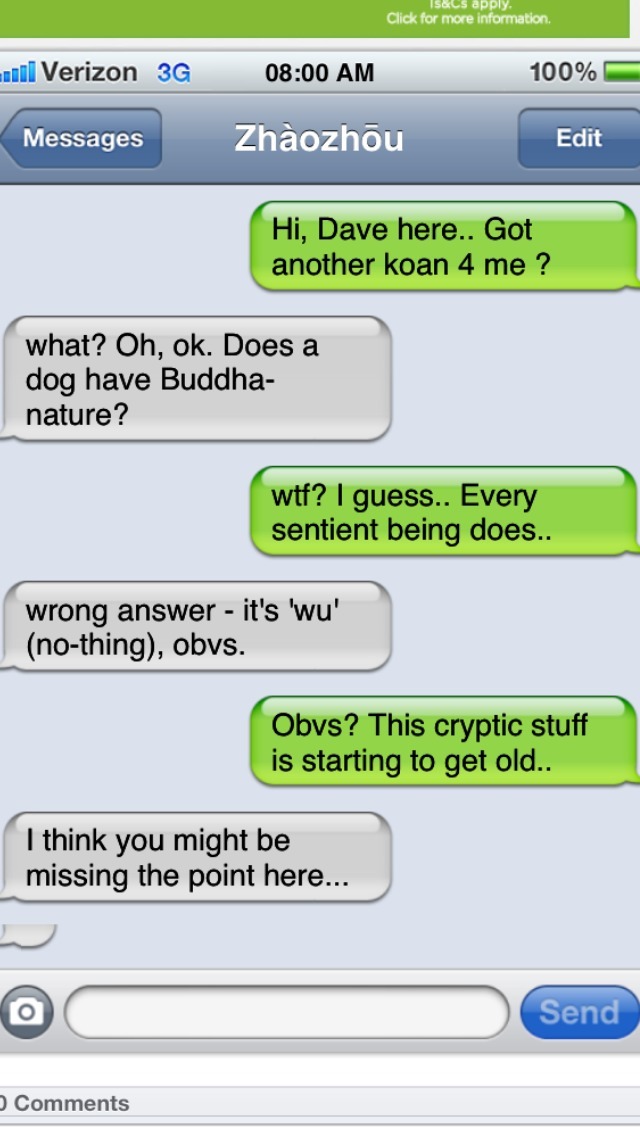
I've been having some text chats (using ifaketext.com in case you're interested) with dead philosophers...
You can see these entirely fictional exchanges at: my tumblr : http://dispirited-dave.tumblr.com/
Wednesday, January 29, 2014
Spirit, Soul, Body, Mind: A Day Conference on Biblical Spirituality
Saturday 1 March 2014, 10.00am-4.00pm in Room TC103, The Park Campus, Cheltenham.

For details take a look here: http://philosvids.files.wordpress.com/2014/01/5312_bibspiritbooklet_jan14.pdf
Humanities Public Lecture - Tim Ingold
The next speaker in our series of Humanities Public Lecture is Tim Ingold, who will be speaking on 'Lines and Weather' on 31 January, Francis Close Hall TC001 (Main lecture theatre) at 7:30pm.
Professor Ingold is Chair in Social Anthropology at the University of Aberdeen. His work combines
 anthropology, ecology, writing, space, art, human movement, and philosophy. He is the author of many books, includingMaking: Anthropology, Archaelogy, Art and Architecture (Routledge, 2013),Being Alive: Essays on Movement, Knowledge and Description (Routledge, 2011), The Perception of the Environment (Routledge, reissued 2000), andLines: A Brief History (Routledge, 2007).
Student, staff and the public are warmly invited to this very special event. Tickets are £5 to the public. University of Gloucestershire staff and students are admitted free of charge, but must obtain tickets through the Online Shop.
Thursday, December 12, 2013
Updates?
These days - most of the RPE student activity seems to be on the Facebook group at https://www.facebook.com/groups/RPEglos/ - I would recommend a look at this for anyone who wants to get a real sense of what our students discuss..
 |
| The Francis Close Hall campus here in Cheltenham at the University of Gloucestershire |
 All this has been alongside our teaching - you can see our course maps : HERE. Some modules ended the year with a Christmas Philosophy Quiz - where one third year student seemed to defeat all comers..
Monday, December 09, 2013
RPE Essay Competition Results:
Well - that was tough! We had over 30 essays for our competition - and there wasn't a bad one among them. We were hugely impressed by the quality - and choosing a winner was very challenging. But we like a challenge, and eventually came to a decision.
The overall winner was Sophia Cahatha from King Edward VI High School for Girls, Birmingham.
An iPad will be on its way to you this week!
Four Runners-Up will receive £20 Amazon vouchers.
These were:
- Georgina Sage (Cheltenham Ladies College)
- Liu He (Concord College, Shropshire)
- Aabynn Cha (Eton College)
- Beth Richards (Wellsway Sixth Form, Keynsham)
Well done to the winners - but also to all those who took part. The winning essay is here: https://philosvids.files.wordpress.com/2014/10/sophia-chatha-rpe-winning-2013-essay.docx
Wednesday, December 04, 2013
More little videos
 Is Reason better than (blind) Faith? http://wp.me/p2xWwL-66
Another of our short Philosophy of Religion videos..
There also some new videos about Buddhism on here -including one where Dr William Large asks me a bunch of difficult questions
: http://philosvids.wordpress.com/2013/12/11/buddhism-ethics-suffering-and-more/

Monday, December 02, 2013
Essay Competition..
Just a quick update: We are currently judging the entries, and will publish the results (on this blog) on Friday 6th December..
Saturday, September 28, 2013
Open Day 12th October
 |
| A student learning space at FCH |
As well as our usual admissions, accommodation, and finance advisers, some RPE academic staff will not only give a talk - but be on hand to chat to throughout the event. You'll also spot (in lovely blue sweatshirts) Student Ambassadors, who help with campus and accommodation tours- and answer all kinds of questions.
A lot of the questions we are asked are about course content - and this 'course map' HERE may help. As may our leaflet that you can download HERE.
 |
| FCH Campus |
Those who know the campus may be interested to see the refurb of the FCH refectory - so here is a picture:

Friday, September 27, 2013
New to Philosophy?
I have recently been asked by some of our new student intake which books I would recommend for someone coming to philosophy for the first time, and it is also a question that often crops up at Open Days. To some extent it is a subjective matter (and I'm sure other staff and students have their own views here), but based on some student feedback, there are a couple of gems that are consistently praised.
 Adopting a thematic approach, Nigel Warburton's Philosophy: The Basics does exactly what 'it says on the tin': it's concise, accessible, walks you through the basics, and encourages you to 'do' philosophy.
Another favourite of many is Bertrand Russell's History of Western Philosophy which adopts an historical approach and gives the reader a sense of how philosophy has developed over the years, although I should point out it was published in 1911, so you won't get anything after that!

To keep up with current developments you might like to take out a subscription to The Philosopher's Magazine. Although it is a 'magazine' and not a journal, it provides a good balance between not being too dense, but also not too simplistic in its approach to topics and issues.


Another favourite of many is Bertrand Russell's History of Western Philosophy which adopts an historical approach and gives the reader a sense of how philosophy has developed over the years, although I should point out it was published in 1911, so you won't get anything after that!

To keep up with current developments you might like to take out a subscription to The Philosopher's Magazine. Although it is a 'magazine' and not a journal, it provides a good balance between not being too dense, but also not too simplistic in its approach to topics and issues.
Wednesday, September 25, 2013
Journal of Buddhist Ethics turns 20..
 |
| Journal of Buddhist Ethics |
Really high quality articles - for the relevant module here - but also for any student. The entire back-catalogue is searchable - and the comment and discussion after many pieces is of a very high quality indeed: see HERE for a recent example of this.
I hope our students continue to make use of it.
Just as an aside.. In the 20th Anniversary Edition there is an article by Abraham Vélez - some of the third years may remember he came to the Buddhism lecture last year with Justin Whitaker (who did some meditation with us), and too part in the discussion. His article is on 'The Dalai Lama and the Nature of Buddhist Ethics' - you can download the pdf (free, of course) HERE. Se more on this at : http://www.patheos.com/blogs/americanbuddhist/2013/09/journal-of-buddhist-ethics-turns-20.html
Cheers,
Dave.
Tuesday, September 24, 2013
Lots of events for students..
As lectures begin, there are also various other events for RPE students to attend locally. Cheltenham Skeptics in the Pub meets regularly (oddly enough, in a pub) - and there is a talk about Scientology this week that should interest those doing RPE. The website has details: http://cheltenham.skepticsinthepub.org
We also have, locally, Gloucestershire Philosophical Society, who meet at out FCH campus (where RPE is based). Students are very welcome at their talks - see http://www.glosphilsoc.co.uk/whatson.html for the current list of upcoming talks. Note the Dr William Large, one of the RPE staff, will be doing one of the GPS talks this term.
As well as these events, well shortly be announcing some details of RPE seminars and trips this academic year. We hope to repeat the Diwali trip (to glamorous Leicester), as well as the 2nd year trip to Spain of course..
Cheers, Dave.
We also have, locally, Gloucestershire Philosophical Society, who meet at out FCH campus (where RPE is based). Students are very welcome at their talks - see http://www.glosphilsoc.co.uk/whatson.html for the current list of upcoming talks. Note the Dr William Large, one of the RPE staff, will be doing one of the GPS talks this term.
 |
| FCH Campus.. |
Cheers, Dave.
Thursday, September 19, 2013
The Story of the Jews...

 Over at our sister blog (TRS at Gloucestershire) - Professor Melissa Raphael offers a review of Simon Schama’s The Story of the Jews: Click HERE to see the review.
The first episode is visible here - but may be only for a limited period.
Subscribe to:
Posts (Atom)