Now available, on Open2. net, the first of fourteen podcasts on applied ethics, presented by Nigel Warburton. Including interviews with high profile contemporary ethicists, including Peter Singer, Michael Sandel, Thomas Scanlon, Mary Warnock, and Roger Scruton
This is available FREE on the web. There are also other resources available.
Thursday, February 14, 2008


Tuesday, February 12, 2008
Malmesbury School Visit
 Another week - another visit. This time I was in Malmesbury, to visit some year 12 and 13 students to talk about applying moral theory to dilemmas.
 I talked about the Omelas short story, and the Runaway Trolley Car, and other moral problems. There is a list of some more of these types of moral dile mmas at http://news.bbc.co.uk/1/hi/magazine/4954856.stm - and what we noted was the none od us had actually ever faced these decisions at all (yet). We then went on to try and think of dilemmas and difficult choices that we had faced, and whether moral theories such as Utilitarianism were of any help...
mmas at http://news.bbc.co.uk/1/hi/magazine/4954856.stm - and what we noted was the none od us had actually ever faced these decisions at all (yet). We then went on to try and think of dilemmas and difficult choices that we had faced, and whether moral theories such as Utilitarianism were of any help...The session was lively - and I enjoyed myself - and I think I learned some things - I hope the class did to. So thanks to Mr Shaw for inviting me - and those who were there (or indeed those who weren't) are welcome to comment here on the usefulness (or not) of moral theory for really facing up to genuine moral problems in life.
Friday, February 08, 2008
Shariah Law and the Bishop...
 Well - the Archbishop of Canterbury, Dr Rowan Williams, seems to have caused more fuss than he might have anticipated. If you see the papers today - you will see why: http://news.bbc.co.uk/1/hi/uk/7234152.stm
What is not clear, really, is what he actually said/meant... You can listen to his actual comments via the BBC page at http://news.bbc.co.uk/1/hi/uk_politics/7233335.stm
Was he suggesting that we allow some communities to opt out of the British criminal law? I don't think he meant this at all. He seemed to actually be referrring to very particular civil matters - like divorce an finance - rather than the caricature of his view that some of the papers have gone for....
He points out that we already have accommodations within the law for Orthodox Jews, and for Roman Catholic views - what he suggests, whether you like it or not (and I am not sure I do), is not a new thing, or a first...
For details on the way in which religious courts are already in use in the UK see: http://news.bbc.co.uk/1/hi/uk/7233040.stm
It is almost more interesting to look at the reaction, than it is is to listen to his actual comments: the word Shariah is so provocative that it causes such a cloud of panic that no one can see through it....
Wednesday, February 06, 2008
Can Computers Cook?
 If thinking about the Philosophy of Mind has made you hungry - see the challenge at www.computercookingcontest.net - which has, I am sure, both culinary and philosophical interest...
Dave
Brimsham Green School (Yate) Visit
 I am back, fresh from a morning with the Year 13 class (Religious Studies: Philosophy & Ethics) at Brimsham Green School, Yate (nr Bristol!).
I hope they have recovered from a barrage of talk from me (3 hours is a long time) - and thanks for inviting me. I hope you can use the comments here to ask any further questions / post comments. I also wanted to follow up on a few things I talked about.
In reference to Natural Law, I came across a good piece re Aquinas at http://www.utm.edu/research/iep/a/aquinas.htm - and am still mulling over the notion of ethics as relating to the perversion of purpose: and how to translate this into practical terms: how does it help with real ethical situations - other than the sexual ones we discussed (at some length - sorry about that).
Our discussion about life after death wandered into Philosophy of Mind (see http://r-p-e.blogspot.com/2007/10/nagels-bat.html for a link re some of the topics) - but I think that this makes sense. In order to even begin to address whether we survive death, we need to know what we are: and as the body is dead, in the ground, lying in a ditch, or cremated - we need to have some sense of what else there may be that could have the potential to 'survive death'...
We also covered Religious Experience - but I think I may have digressed.. Comments welcome from those at Brimsham Green - and of course any of our students who recall the EdExcel Religious Studies (Philosophy & Ethics) days of their (relative) youth...
Next week - Wiltshire...
Dave
Tuesday, January 29, 2008
Barack Obama, the e-mail culture and religious smears
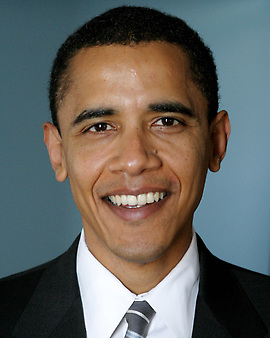 I thought this might interest readers of this blog. You can watch a full report, via PBS, HERE .
Now, as you will know Barack Obama is one of the two main competitors for the Democratic nomination for the next US Presidential election. Forwarded, sent-on, bulk-posted (viral style) E-mails have been circulating in large number over e-mail networks suggesting that he is secretly a Muslim.
You can read the e-mail itself at http://www.snopes.com/politics/obama/muslim.asp There are perhaps two things of note about this. One is the smear campaign itself - but I guess not a great shock - and the kind of thing that happens with the Internet..
Secondly there is the idea that his being a Muslim is something that he would have to keep secret - and that Muslims are people who go about pretending to be Christians in order to deceive and gain power over others. It seems that to buy into the world view of this viral e-mail you have to begin in a culture of fear and paranoia that is itself rather frightening. Also disturbing is the realisation that the authors of this e-mail, while evoking honesty, God and values, are involved in a politically motivated act of deception....
[it is perhaps worth noting that the Fox News network reported these rumours - see HERE, in part, via John Gibson, the same person who openly mocked the death of Heath Ledger - and laughed about his demise HERE ]
To hear the tone of this coverage see http://thinkprogress.org/2007/01/19/fox-obama-madrassa/ and watch/listen to the video clip there of Fox News coverage...
Monday, January 28, 2008
A Good Death - how do we measure the value of 'a life'?
Over at http://unfspb.wordpress.com/2008/01/22/a-good-death/#more-336 there is an interesting discussion that arises out of the death of the actor Heath Ledger.
His death is often described in media reports as a 'tragedy' - but how do we balance the value of a young life lost and an old life? Is the length the aspect that prevents us from seeing a death as tragic?
Does the author at UNFSB really think that Heath's death was a 'good' one? Or is the idea of a short, wonderful life being better than a long, but maybe bland one a useful corrective to our usual view - or a naive and overly-romantic notion?
dave
His death is often described in media reports as a 'tragedy' - but how do we balance the value of a young life lost and an old life? Is the length the aspect that prevents us from seeing a death as tragic?
Does the author at UNFSB really think that Heath's death was a 'good' one? Or is the idea of a short, wonderful life being better than a long, but maybe bland one a useful corrective to our usual view - or a naive and overly-romantic notion?
dave
Monday, January 14, 2008
Julian Baggini Talk: All Invited

Popular Philosopher Julian Baggini will be giving a talk on communitarianism in Britain. In a recent piece for Prospect magazine, he writes that while the elite of Britain remains liberal, much of the rest of the population adopts communitarian views. This finding derives from his book Welcome to Everytown. You can hear him talking about his book and the recent Prospect article on the BBC Radio 4 programme Start The Week.
The talk will take place on 7th February from 6pm in the CEAL Building (CE102).
You can read more on the philosophy of communitarianism at the Stanford Encyclopaeda of Philosophy entry.
Friday, January 11, 2008
Podcast on Buddhism for RPE208
Those of you doing RPE208 - Indian Religions - may wish to download the Four Noble Truths podcast that I talked about in class.

You can find it at http://r-p-e.blogspot.com/2007/02/buddhism-podcast-2-four-noble-truths.html - and download via a link there.
You may also wish to browse some other bits of the blog that have Buddhist material on.
Wednesday, January 09, 2008
Cheltenham Ladies College Event - 2008
Cheltenham Ladies College is having its annual Religious Studies Event - and as last year (see the report by RPE students HERE) they have kindly invited RPE students to attend should they wish.
Details are below - but let me (dwebster@glos.ac.uk) know if you are interested in attending (it is free!).
Cheers,
Dave
---
9.00am – 3.45 pm Thursday 7th February 2008
The Cheltenham Ladies’ College
----
Details are below - but let me (dwebster@glos.ac.uk) know if you are interested in attending (it is free!).
Cheers,
Dave
---
9.00am – 3.45 pm Thursday 7th February 2008
The Cheltenham Ladies’ College
----
Why Study Religion, Philosophy and Ethics?
 Philosophy seems more popular in Schools than ever. [As noted HERE by Nigel Warburton]
In Scotland, the Herald newspaper has considered this - causing a number of its online readers to comment HERE about the value of philosophy. The comments are worth a glance as they reveal something of the public attitude to philosophy.
I wanted to ask our students (and other readers) to comment as to:
- Whether there was any value in studying philosophy (to both individuals and society in general)
- Whether academic disciplines such as Philosophy and Religious Studies should have to demonstrate a 'usefulness' in order to be considered worthwhile
- What reasons motivate individuals to study these subjects. [See HERE for previous posts on this topic]
- Why has there been such a rise in the numbers studying Religious Studies and Philosophy (often including ethics) at AS/A2 ('A' level to older people like me) here in the UK?
GLOUCESTERSHIRE PHILOSOPHICAL SOCIETY 2008
Here are the upcoming Gloucestershire Philosophical Society sessions-
1. 16th. January, 2008. Chris Eddy, Swindon Philosophical Society. :"Why I am not an atheist".
Chris Eddy accepts Philip Kitcher's challenge, in 'Living with Darwin', to articulate a form of belief in God which makes no occult claims, yet is also clearly distinct from secular humanism. The object of the talk is to counter "the meritocratic, ideological bullyings of Dawkins, et al.".
2. 30th January, 2008. The Annual GPS Dinner will be held in the evening - further details of venue to be circulated.
3. 13th.February, 2008.Dr. Roberta Stevenson, University of Gloucestershire. "The meaning of old age in the 21st. Century: why we need a feminist and literary gerontology".
Roberta Stevenson has been involved in a study of this issue over the past few years.
4. 27th. February, 2008. Leckhampton Seminar at the Brown Jug, Bath Rd. Cheltenham, 10.30.a.m.”Modernisation: a vacuous concept?"
5. 12th. March, 2008. Dr. Roy Jackson, University of Gloucestershire: "Nietzsche and Islam".
Roy Jackson considers the important influences that Nietzsche's teaching has had and continues to have on the evolution of Islamic spirituality.
Meetings scheduled for 16 January, 13 February and 12 March will be held at 7.30 p.m. in room HC203 Francis Close Campus, University of Gloucestershire, Swindon Road, Cheltenham.
Sunday, January 06, 2008
Blogging the Qur'an
"How should Islam's sacred book be read in the 21st century? How should non-Muslims interpret its message? In a year-long project, Ziauddin Sardar will read the Qur'an from beginning to end, discussing its verses, themes, language and meaning." Sardar is a Muslim reformist and you can read his first entry at Guardian Online.
Tuesday, January 01, 2008
Kant Attack Ad
Those who observe US political campaigning will be familiar with the 'Attack Ad' - the vicious, personal TV ads that assualt viewers with assertion and implication. This is a nice spoof version on Kant: enjoy.....
Dave
Dave
New Year's Resolutions
According to an article I read today, the practice of making New Year's Resolutions dates back to Babylonian times:
Four thousand years ago in Babylonian times, resolutions were made with the
intention that what was done on the first day of the New Year would be reflected
in the remaining days of the year. Incidentally, the Babylonian New Year
was celebrated in March to coincide with the planting of the spring crops.
The Babylonians were in touch with the rhythms of the seasons and farming.
Well, maybe: You can read some philosophical musings on the topic at http://theologica.blogspot.com/2007/12/new-years-resolutions-guest-post-by.html
Is it true that the making of resolutions, as the post linked to here suggests, reflect "a sensed need for moral reformation". I guess the two extremes are seeing Resolutions in this serious, moral sense, and the view that they are petty, trivial and to do with a banal self-obssessive expression of dissatisfaction and self-disgust. I guess the two might be not so far away from each other as they seem.
Me? I think 'returning essays to students on time' does not seem exceptionally moral as a goal - but may be a popular one...
Any philosophical resolutions from readers of the blog?
Happy New Year, Dave
Four thousand years ago in Babylonian times, resolutions were made with the
intention that what was done on the first day of the New Year would be reflected
in the remaining days of the year. Incidentally, the Babylonian New Year
was celebrated in March to coincide with the planting of the spring crops.
The Babylonians were in touch with the rhythms of the seasons and farming.
Well, maybe: You can read some philosophical musings on the topic at http://theologica.blogspot.com/2007/12/new-years-resolutions-guest-post-by.html
Is it true that the making of resolutions, as the post linked to here suggests, reflect "a sensed need for moral reformation". I guess the two extremes are seeing Resolutions in this serious, moral sense, and the view that they are petty, trivial and to do with a banal self-obssessive expression of dissatisfaction and self-disgust. I guess the two might be not so far away from each other as they seem.
Me? I think 'returning essays to students on time' does not seem exceptionally moral as a goal - but may be a popular one...
Any philosophical resolutions from readers of the blog?
Happy New Year, Dave
Subscribe to:
Posts (Atom)